 Illinois Divorce Lawyer Blog


Preface
I have spent more than two decades of my practice focused, with some intensity, on the problem of parental alienation. In that time I have represented targeted parents and, in a smaller number of cases, parents accused of alienating conduct. I have been retained as a consulting and testifying expert on the subject of parental alienation, and I was one of the attorneys connected to In re Marriage of Bates, the Illinois Supreme Court case that remains a landmark in this field. I say all of this not to establish authority for its own sake, but to be candid with the reader about the vantage point from which this book is written. The majority of the data and narrative in this book derives from the decades of posts that I have written in my Illinois Divorce Lawyer Blog.
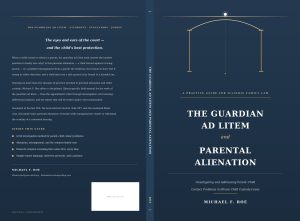
This is a practice guide, and its intended reader is the guardian ad litem — the attorney appointed under Section 506 of the Illinois Marriage and Dissolution of Marriage Act to investigate the facts of a case, interview the child and the parties, and report to the court in the best interests of the child. It is also written with child representatives, attorneys for the child, family-law practitioners, evaluators, and judges in mind, because the guardian ad litem never works in isolation. But the organizing question of every chapter is the practical one that a guardian ad litem must answer: what do I actually do when a case lands on my desk with allegations that one parent is turning a child against the other?
A word about the posture of this book. I take parental alienation seriously as a real and damaging phenomenon. I have watched it destroy relationships between loving parents and their children, and I have watched it inflict lasting harm on the children themselves. At the same time, I have learned — sometimes the hard way — that the guardian ad litem who walks into a case already convinced that alienation is present, and who treats the concept as beyond question, is a guardian ad litem who will be impeached on cross-examination and, worse, who may get the child’s welfare wrong. The most effective guardians ad litem I have known hold two things at once: a genuine understanding that alienation happens and is serious, and a disciplined refusal to reach that conclusion before the investigation earns it. This book is written to help the reader do both.
Throughout, I refer readers to recognized resources in this field, including the Parental Alienation Study Group (PASG) at pasg.info, the scholarly and professional literature, and, where useful, essays I have written over the years at my blog, the Illinois Divorce Law Blog, at ww.illinoisdivorcelawyerblog.com. Nothing in this book is legal advice for any particular case, and nothing in it should substitute for a guardian ad litem’s own independent judgment, the guidance of the appointing court, or the applicable Illinois statutes and Supreme Court Rules as they exist at the time of any given appointment.
— Michael F. Roe